
Shacharit – Part 3
We continue with our series of Breslev customs. Todays’s portion discusses the daily prayer liturgy...



Le‘ilui nishmat Leib ben Yitzchak Ya’akov Sears, a”h – Yartzeit: 30 Shevat, Rosh Chodesh Adar
Le’ilui nishmat Yosef ben Shmuel Zeitlin, a"h – Yartzeit: 18 Menachem Av
Shacharit (continued)
In “Ahavat Olam,” Reb Gedaliah combined both nuschot, Ashkenaz and Sefard, as follows: “maher vi-havei ‘aleinu berakhah vi-shalom, vi-haviyeinu le-shalom meheirah me-arba’ kanfot kol haaretz…” He instructed Rabbi Shmuel Tukatzinsky to do so, as well.
* * *
Near the end of "Ahavat Olam," Reb Gedaliah would say "u-shevor ‘ol golut ha-goyim me-‘al tzavorenu…" (heard from Rabbi Noach Cheifetz and Rabbi Dovid Shapiro). (This seems to be a combination of two nuschot: “ol ha-goyim,” which is found in Abudarham, Siddur RaMaK, Siddur ARI Rav Asher, et al.; and “ol goluyot” or “ol ha-golut,” which is found in some Nusach Sefard siddurim, e.g. Siddur Heikhal ha-Berakhah [Komarno]; also see Likkutei MaHaRiCH, vol. I, p. 129. As a historical aside, at some point, due to fear of the Christian censors, certain texts of the Siddur were emended to state “uleinu”; while others subsequently combined the censored text with the original text; see Rabbi Yaakov Emden, Lu’ach Eret (Rabbi Dovid Yitzchaki, ed.), hosafah, p. 459, note 7; also see Siddur ha-Meforash, hakdamah. The Manistritcher Rebbe used to say "u-shevor ol goliyot ha-goyim…” at the end of Birkhat ha-Mazon, as stated in Ehrkei Yehoshua, Kuntres Perach Shoshanim 40; however, it does not state if this was also his nusach in “Ahavas Olam.”)
* * *
Rabbi Levi Yitzchak Bender remembered that in Uman the Breslover Chassidim said "ushevor ol ha-goyim me-al tzavorenu…" (Si’ach Sarfei Kodesh IV, 149).
* * *
Reb Gedaliah said to close one’s eyes, using one’s right hand to close them tightly, during both verses: “Shema” and “Boruch Shem.” (This is related to the Rebbe’s words in Likkutei Moharan I, 36:3. Rabbi Chaim Vital in Sha’ar ha-Kavannot, Drushei Kriyat Shema, Drush 6, similarly states that one should cover his eyes for both verses. However, the minhag mentioned in Shulchan Arukh, Orach Chaim 61:5 is to cover one’s eyes one while reciting only the first verse. Reb Nosson relates shutting one’s eyes during Kriyat Shema to nullification in the Ohr Ein Sof in Likkutei Halakhot, Milah 5:11, based on the Rebbe’s words in Likkutei Moharan I, 65:3. That is, by gazing beyond the multiplicity of the finite world we ordinarily experience, we can perceive the Divine Oneness, which is all encompassing and infinite.)
* * *
Immediately after Kriyat Shema, Reb Gedaliah was particular to recite the words beginning "Emet ve-yatziv" until "ve-yafeh" in one breath. (Cf. Siddur Tefillat Yesharim−Ben Ish Chai, ad loc., that one should not interrupt the recitation of these fifteen words. The fifteen repetitions of the connective letter vav have kabbalistic significance according to the kavannot of the ARI zal.)
* * *
According to Sha’ar ha-Kavannot, in the paragraph after Shema, when one’s says “u-devarav chaim ve-kayamim… la’ad...” one kisses the tzitzit, passes them over one’s eyes, and releases them.
* * *
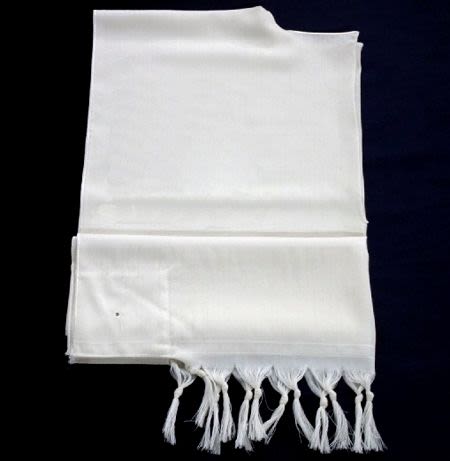
Reb Gedaliah said that after reciting Kriyat Shema, one should keep all four tzitzit in front of oneself until after Shemoneh Esreh; however, one may tuck them into one’s gartel in order not to hold them the entire time (heard from Rabbi Dovid Shapiro).
* * *
According to Nusach Sefard, the paragraph after the Shema concludes: “ve-ein lanu ode elokim zulasekha sela,” while Nusach Ashkenaz concludes “ve-ein lanu elokim zulasekha.” Reb Gedaliah used to say that we add the word “ode” because if one were to expire from kalot ha-nefesh after the word “Elokim” according to Nusach Ashkenaz, he would have denied belief in Hashem, chas ve-shalom. However, if one were to stop after the word “ode,” he would have stated that we have no “other god.” This vort is supported by the Gemara in Nedarim 10b, which states that we use the term “korban la-Shem” as opposed to “la-Shem Korban,” because if one were to pause after saying “la-Shem,” he would have taken Hashem’s Name in vain (heard from Reb Elazar Kenig).
Shemoneh Esreh: It is not clear if in the berakhah “Magen Avraham,” one should say “konei hakol” or “vi-konei ha-kol.” However, Sha’ar ha-Kavannot omits the vav. (The standard Nusach Sefard includes the vav. However, all versions of the Siddur ARI zal omit it. So do several Chassidic nuschot, e.g. Imrei Pinchos [Bnei Brak 2003] vol. I, Sha’ar Seder ha-Yom 86; Siddur Baal ha-Tanya; Siddur Tefillah Yesharah-Berditchev (in hagahah); Darkei Chaim ve-Shalom [Munkatch] 155; Erkhei Yehoshua [Manistritch], Kuntres Perach Shoshanim 18; Siddur Tzelosa de-Shlomo [Bobov]; et al. This omission is supported by Siddur Rav Amram Gaon, Abudarham; Zohar, Pekudei, p. 161; Tikkunei Zohar, Tikkun 70, et al.)
* * *
Reb Levi Yitzchak Bender remembered that in Uman, in the berakhah “Atah gibor,” the Breslover Chassidim pronounced the word "gashem" with a kametz under the gimel, not "geshem" with a segol. Most Breslovers today also do so. (Si’ach Sarfei Kodesh IV, 150. This may be a regional minhag, since the Skverer Chassidim follow it, as did the Manistritcher Chassidim of Uman. However, Rabbi Shimshon Barsky of Bnei Brak said that his father, Rabbi Noson Barsky, pronounced “geshem” with a segol. Since Reb Noson Barsky lived in Lublin, Poland, this may reflect the local custom in that region. The vowelization of this word is the subject of much halakhic debate.)
* * *
During the summer, in the berakhah “Atah gibor,” Reb Gedaliah would say "mashiv ha-ru’ach u-morid ha-tal." This is the custom of the Tzefat community (see Be’er Heitiv, Orach Chaim 114:3, and the BaCH, ad loc. This is the nusach of Siddur ARI Kol Yaakov. Among Chassidim, cf. Rabbi Tzvi Hirsh of Ziditchov, Pri Kodesh Hilulim, in the name of Rabbi Yisrael of Koznitz; Shulchan ha-Tahor [Komarno], 114, with Zer Zahav; Darkhei Chaim vi-Shalom [Munkatch], Shemoneh Esreh 157, in the name of Rabbi Zvi Elimelekh of Dinov; et al. It is also the nusach ha-GRA.)
* * *
Once Reb Gedaliah was leading the davenning and said "mashiv ha-ru’ach u-morid ha-tal." Apparently this raised some eyebrows. Reb Michel Dorfman, who was present at the time, later asked him about this. Reb Gedaliah replied, “When the Gabbai announces this [on the first day of Pesach], he calls out ‘mashiv ha-ru’ach u-morid ha-tal’ “ (heard from Rabbi Ephraim Kenig).
* * *
Reb Avraham Sternhartz only said “morid ha-tal” (heard from Rabbi Nachman Burshteyn).
To be continued.
Tell us what you think!
Thank you for your comment!
It will be published after approval by the Editor.