
Chaim ibn Attar – The Light of Life
The Jordanians tried to destroy the Ohr HaChaim's holy gravesite three times, but to no avail. The hammer that tried to destroy the gravesite boomeranged...

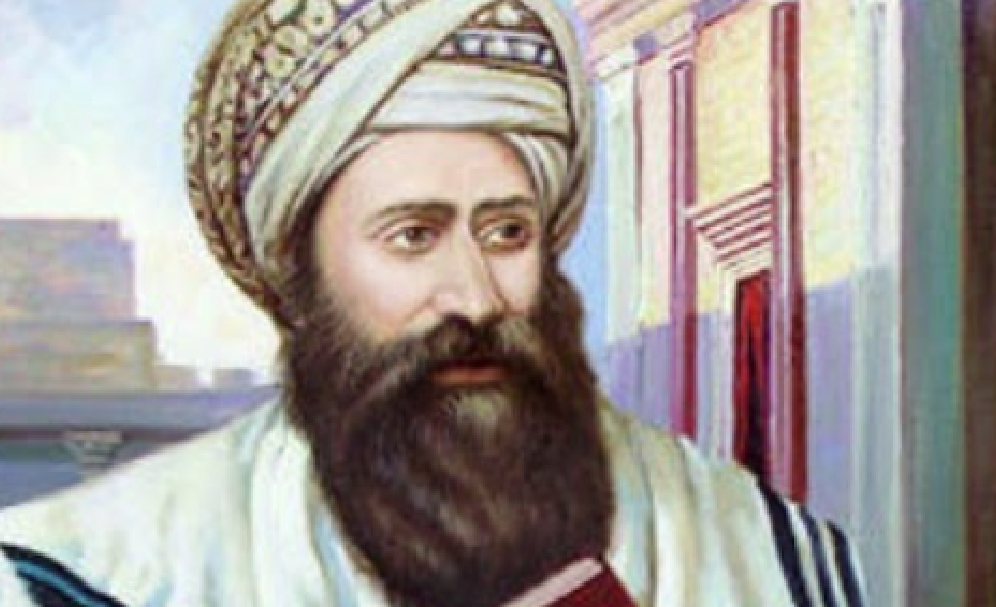
Last Wednesday, I was reading a Baal Shem Tov story which talked about an amazing miracle that Rabbi Chaim ibn Attar, the Ohr HaChaim, had done for the residents of Israel.
I’m not going to tell you the whole story, but suffice to say, once I read that the Baal Shem Tov told his disciples that the Ohr HaChaim was the Mashiach of his generation, I decided to go and visit his grave site.
I knew he was buried in Jerusalem, but I didn’t know where, exactly, or even how to get there.
The next day, I drove my husband to Chut Shel Chesed, where he learns every morning in the English program, and then I drove off to the Mount of Olives. I’d looked up the Ohr HaChaim’s grave on Google, and I learnt some interesting things:
After the 1948 war, when Jerusalem was divided between Israel and Jordan, the Jordanians decided to smash the ancient Jewish 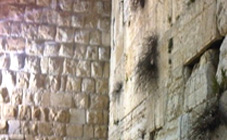 cemetery of the Mount of Olives to pieces.
They were driving tractors at the ancient gravestones, trying to smash them, uproot them, and generally, destroy them. A Jordanian soldier was driving his tractor at the Ohr HaChaim’s gravestone – when his tractor overturned on impact, killing the driver. The Jordanians stuck another soldier on another tractor, and tried again: the same thing happened.
Then, a third Jordanian soldier attacked the gravestone with a hammer – it bounced off the stone and struck him in the head, killing him. After that, the Jordanians left it alone.
I decided I was already quite taken with the Ohr HaChaim.
I drove to the top of the Mount Olives, by the 7Arches hotel, and parked. The place was full of German and American tourists, doing the evangelical tour of Jerusalem thing.
I walked around for half an hour, trying to find his tomb – all of the graves looked far too new. It turned out, I was in completely the wrong part. I got directions from a friendly Jew who turned up when I was starting to get a bit frustrated, and he told me to go back to the Arab part, and take the winding path down to the bottom.
“Is it safe to go there?”
“Of course!” he smiled back. “It’s the Ohr HaChaim! The Mashiach of his generation!”
I was sold.
I got down to the bottom – and there were hundreds of graves. I had no idea where the Ohr HaChaim was. Apart from one lone Jew at the bottom of the hill, it was me and a bunch of Arab workers.
I looked around at the inscriptions, but most of them were illegible, and I started to wonder why I’d come. Maybe the lone Jew at the bottom of the hill could help me? As I walked I tripped badly on one of the worker’s cables, and got a fright; I suddenly felt very vulnerable and alone.
Just as I got to the Jew, he stood up and left – I didn’t mind, because I could already see who he’d been praying by: the Ohr HaChaim. I stumbled up to the grave, put my hand on it – and that’s when the siren went off, marking Holocaust Day. I’d completely forgotten.
It was the last in a series of ‘shocks’ – and I burst into tears. I was alone by the Ohr HaChaim, surrounded by Arabs with power tools, looking up an amazing view of where the third temple should be, praying with all my heart that there shouldn’t be another holocaust.
It was very intense.
I tried to read the inscription on the tombstone, and I could see where the Jordanians had attacked it; there was a clear mark on the stone, in the word ‘kinah‘. That caught my attention. ‘Kinah’ in Hebrew means ‘zealous’ – that’s why it was on the tombstone. But it also means ‘jealousy’.
That was the one area that the Ohr HaChaim’s defenses were weak. That is the one area I’ve been trying to work on a lot recently. That’s the one thing that divides us, the Jewish people, and makes us hate each other.
It was a lot of food for thought.
I made my way back up the hill; passed the churches with all their barbed wire and broken glass stuck in the walls; pass the cave tomb of the prophets Malachi and Haggai; back to my waiting car, which now looked quite lonely, as all the tour buses had left.
The Ohr HaChaim. The ‘Light of Life’.
I don’t know what made me come, but I was pleased to have had the chance.
I was even more pleased when I came home, and my mum told me about all the incidents that have been happening there recently, including stone throwing and an attempted lynch.
Hmmm.
Who knew?
That afternoon, I was a zombie. I couldn’t move off the couch. It had been such an intense praying experience – quite similar to what happens in the Ukraine, sometimes – that I was thrown by it all, and didn’t know what to think.
Can things really change? Will things really change? Can another holocaust really happen, in my lifetime (G-d forbid)? Can Mashiach really come? Will our enemies really all melt away, and the Dome of the Rock be replaced by our holy Jewish temple?
I don’t know. But down there by the grave of the Ohr HaChaim, it felt like everything – the very best, and the very worst, G-d forbid – was possible.
7/09/2012
Amazing!! I have been reading your journal for several years and you never seize to amaze me with your emuna in H'shem and the chizuk I receive from you. May H'shem continue to guide you. And also you should continue to grow to higher spiritual levels…Amen! And next time you go to any kever…please email me…It would be a privilege to accompany you! I also live in Jerusalem!:)
7/09/2012
I have been reading your journal for several years and you never seize to amaze me with your emuna in H'shem and the chizuk I receive from you. May H'shem continue to guide you. And also you should continue to grow to higher spiritual levels…Amen! And next time you go to any kever…please email me…It would be a privilege to accompany you! I also live in Jerusalem!:)