
Terumah: The Tabernacle in Our Heart!
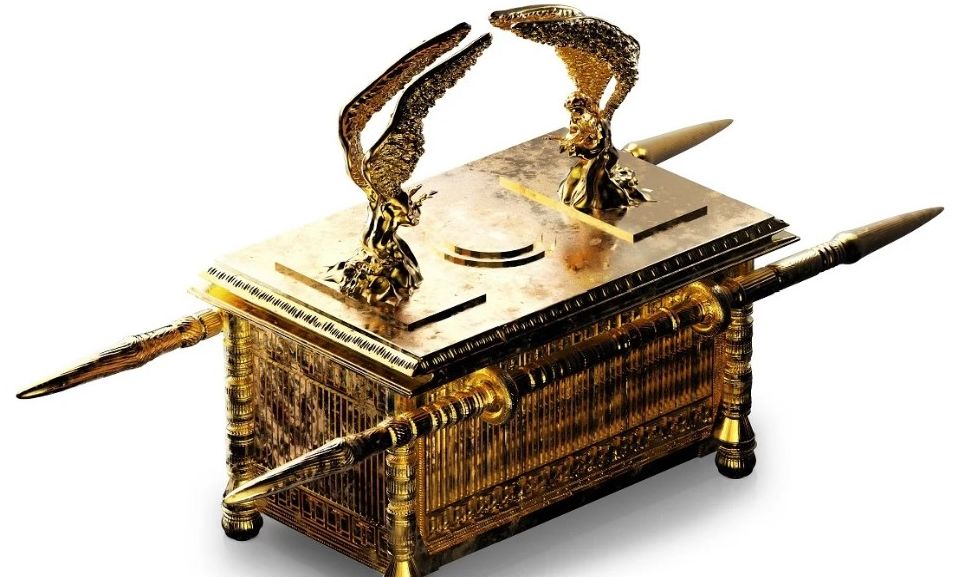
This week’s Torah portion focuses on the Mishkan (the Tabernacle), which is the dwelling place for the Shechinah (Divine Presence).

Portable Mount Sinai
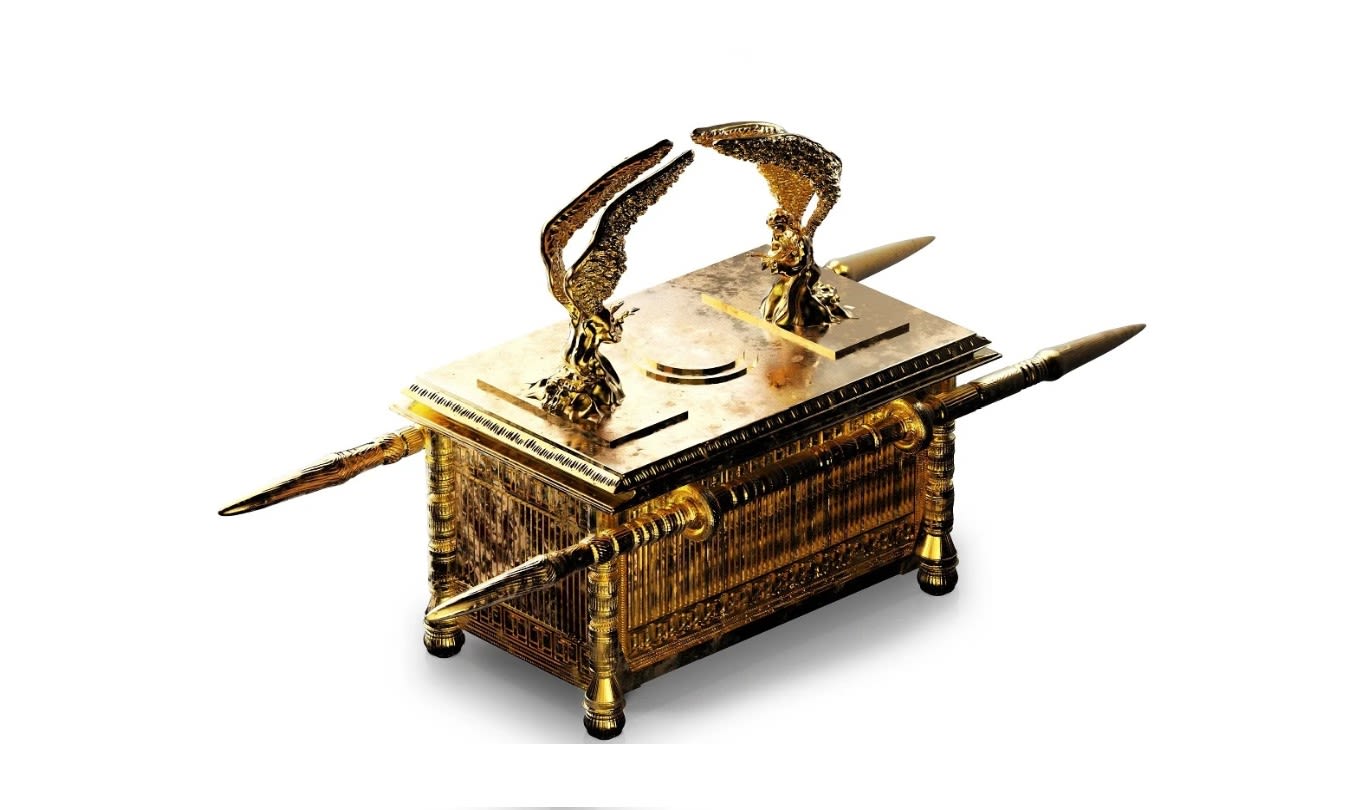
This week’s Torah portion focuses on the Mishkan, the Tabernacle, the dwelling place for the Shechinah (Divine Presence). With the exception of the tragic incident of the Golden Calf, the rest of Shemot (Exodus) is devoted to the preparations for and the construction of the Mishkan. Thus, a major part of Shemot, which the Ramban calls the Book of Redemption, discusses the Mishkan.
The Ramban explains that the redemption from Egypt wasn’t complete with the physical departure from the land of slavery, nor was it complete with the giving of the Ten Commandments at Mount Sinai. The redemption was complete only when the Jewish people had a permanent replica of the revelation at Mount Sinai in their midst. In his commentary, the Ramban demonstrates that the Tabernacle, as a whole and in its details, was symbolic of the historical experience at Mount Sinai. For example, God spoke to Moshe from the Holy Ark, just as He spoke to Moshe from Mount Sinai when He gave him the Torah.
The Tabernacle, ringed by the tribes and topped by the cloud of God’s Presence, was the nation’s central rallying point. The Beit Hamikdash, the Temple in Jerusalem, continued the Tabernacle’s function. Throughout the long and bitter exile the centrality of God’s Presence is represented by the “miniature sanctuaries” (Yechezkiel/Ezekiel 11:16) of synagogues and study halls (Megilla 29a), for it is in them that Jews hark back to the sounds of Sinai and the radiance of the Temple (based on the ArtScroll Chumash).
A Good Buy
The Torah begins the instructions for the Tabernacle’s construction with this verse: “Speak to the Children of Israel and let them take for Me an offering, from every man whose heart moves him you shall take My offering” (Shemot 25:2).
The Midrash says: “`V’yikchu — and let them take for Me an offering — This is the intention of the verse: ‘For I have given you a lekach tov — good teaching, do not forsake My Torah’ (Mishlei 4:2). Do not forsake the good mekach (merchandise) I have given to you [V’yikchu, take, and lekach tov, good teaching, are both related grammatically to mekach, merchandise]…
“Is there any merchandise where the seller is sold together with the merchandise? God said to the Jewish people, “I ‘sold’ you My Torah, I Myself am sold together with it, as it says: ‘And let them take for Me a portion’ [meaning, “V’yikchu li,” let them take, i.e., purchase Me].
“This resembles a king who had an only daughter. A prince married her and wanted to return to his homeland with his new wife. The king said to him: ‘Although I gave you my only daughter, I can’t bear to separate from her. I can’t tell you not to take her home, though; she’s your wife. Do me this favor, every place you go build a room for me so I can dwell with you, because I can’t bear to leave my daughter.’
“That is what God told the Jewish people: ‘I’ve given you the Torah. I can’t be separated from it. I can’t tell you not to take it. So wherever you go, make a house for Me to dwell in, as it says: ‘They shall make a Sanctuary for Me’ (Shemot 25:8)” (Midrash Raba, Terumah, parshah 33,1).
The Shechinah and the Torah
Rabbi Yosef Salant, the rav of Jerusalem, was perplexed by this Midrash. It begins by explaining the verse, “V’yikchu — and let them take for Me a portion” with a verse in Mishlei: “I have given you a lekach tov — good teaching.” That is a clear statement that God is the ‘seller,’ and the Torah is His ‘merchandise.’ The Midrash seems to be focusing us on the wonderful deal we made; we ‘purchased’ the Torah at Mount Sinai. But then the Midrash continues by saying that the Jewish people bought God, as if it could be! What is this Midrash’s deeper meaning?
Rabbi Salant explains that Midrash is informing us that the reason we were given the Tabernacle, the dwelling place of the Shechinah, is because God gave us the Torah. God doesn’t want to, and isn’t able to separate from the Torah, like the king who can’t be separated from his only daughter and requests to live with his son-in-law and daughter.
In examining the parable, we see that the only reason the king lives with the prince is because he wants to be with his daughter. If the prince abandons the princess, the king would obviously end his relationship with the prince. The king’s relationship with the prince depends on the prince’s relationship with the princess.
In the same way, our relationship with the Almighty depends on our relationship with the Torah. If we abandon the Torah through not learning Torah or not keeping its precepts, the Torah is no longer with us and the Shechinah will depart from us.
“God comes with the merchandise” means that the Jewish people bring the Shechinah into olam hazeh, this world, by means of the Torah. Therefore, the Midrash cautions us to be exceedingly careful not to abandon the Torah: “Do not forsake the good merchandise I have given to you,” “For I have given you a good teaching, do not forsake My Torah” (Be’er Yosef).
Making it Yours
Rabbi Yechezkel Levenstein finds an additional insight in this Midrash. The Midrash emphasized that God can’t separate from the Torah, just as the king can’t bear to leave his daughter. If a person separates God from the Torah, in other words he learns for intellectual stimulation rather than as a form of Divine service, his learning is not God’s Torah.
Reb Yechezkel illustrates this with the following Gemara: “Rav Mesharshia says, ‘Doeg and Achitofel didn’t know how to properly explain a halacha (Jewish Law)’” (Sanhedrin 106b). The Gemara raises an objection, though, because Rabbi Yitzchak said that Doeg and Achitofel could ask four hundred piercing questions about the halachic ramifications of a tower flying through the air! (Doeg and Achitofel lived at the time of Dovid Hamelech [King David] and Shaul Hamelech [King Saul], 3,000 years ago, long before the advent of modern air travel). The Gemara answers that [although they were outstanding scholars] they never correctly derived the halacha from all their deliberations, because “God’s secrets are to those who fear Him” (Tehillim 25).
Doeg was an intellectual giant. But he spoke maliciously about the priests in Nov, and then executed the death sentence: “Nov, the city of the priests, he smote with the edge of the sword, both men and women, children and sucklings…” (Shmuel I, 22:19). His academic credentials didn’t prevent him from speaking lashon hara, malicious tale bearing, and of murder (Ibid. 106b).
This is similar to the so-called “scholars” who would write novella on the Talmud while puffing on their pipe — on Shabbat!
Doeg and Achitofel’s intellectual greatness was undisputed; no one could answer their four hundred questions. But, Reb Yechezkel explains, greatness in Torah lies not in the sharpness of his mind, but in the scholar’s fear of Heaven. We have to open our heart to God to allow the Torah to leave a lasting impression on us.
Based on this principle, we can understand why a person needs siyata d’Shamaya, Divine assistance, for his Torah to remain with him.
“Rabbi Yitzchak said, if a person claims, ‘I toiled in Torah and wasn’t successful in my learning,’ don’t believe him; ‘I didn’t toil and I succeeded,’ don’t believe him; ‘I toiled and succeeded,’ believe him. What is this referring to? To Torah, but in business everything depends on siyata d’Shamaya, Divine assistance. Even regarding Torah, the statement was only made concerning understanding what was learned. When it comes to remembering what one has learned, it depends on siyata d’Shamaya” (Megilla 6b).
The effort we put into learning Torah can sharpen our mind and understanding, says Reb Yechezkel, but for the Torah not to be forgotten, we need siyata d’Shamaya. In other words, we need siyata d’Shamaya to absorb the Torah we learn and make it a part of our spiritual makeup. We can sharpen our intellect from Torah study, but to change and acquire the Torah permanently we have to open a place in our hearts for the Creator (based on Kovetz Inyanim).
The Kotzker was once asked: “Where can I find God?”
“Wherever you’ll allow Him in,” came the answer.
Through opening our hearts and allowing Him to enter, we can make the Torah a permanent part of us and merit that the Shechinah will remain with us.




Tell us what you think!
Thank you for your comment!
It will be published after approval by the Editor.